

At a Glance
At a Glance
What happens during traditional Thai massage? Learn about clothing, positions, pressure, assisted stretches and the stages of a comfortable first session.
GRANDTHAI Guide
The Philosophy Behind Thai Massage
Traditional Thai massage combines bodywork with a broader philosophy of attention and balance. It is often described through the idea of sen, or energy lines, and has cultural connections with Buddhist mindfulness and care for others.
You do not need to adopt that traditional explanation to understand the practical experience. The therapist uses rhythmic pressure and guided movement while paying attention to your comfort. The guest generally rests rather than performing an active exercise routine.
This is why Thai massage is sometimes compared with assisted yoga. The phrase describes guided stretching; it does not mean you must be flexible, achieve a pose or accept a movement that is uncomfortable.
GRANDTHAI Guide
Preparing for Thai Massage
In a traditional clothed session, oil is not the main feature. The guest wears loose, comfortable clothing that allows movement. This differs from an oil massage, where the therapist’s hands glide directly over the skin with a product.
A calm room, comfortable temperature and time to settle in help set the tone. Tell reception about relevant restrictions when booking, then discuss pressure preferences with the therapist before the session begins.
Mention injuries, recent procedures, known conditions or any movement you have been advised to avoid. Ask about the clothing arrangements for the actual treatment rather than assuming every Thai-style appointment follows the same format.
GRANDTHAI Guide
Positions During a Session
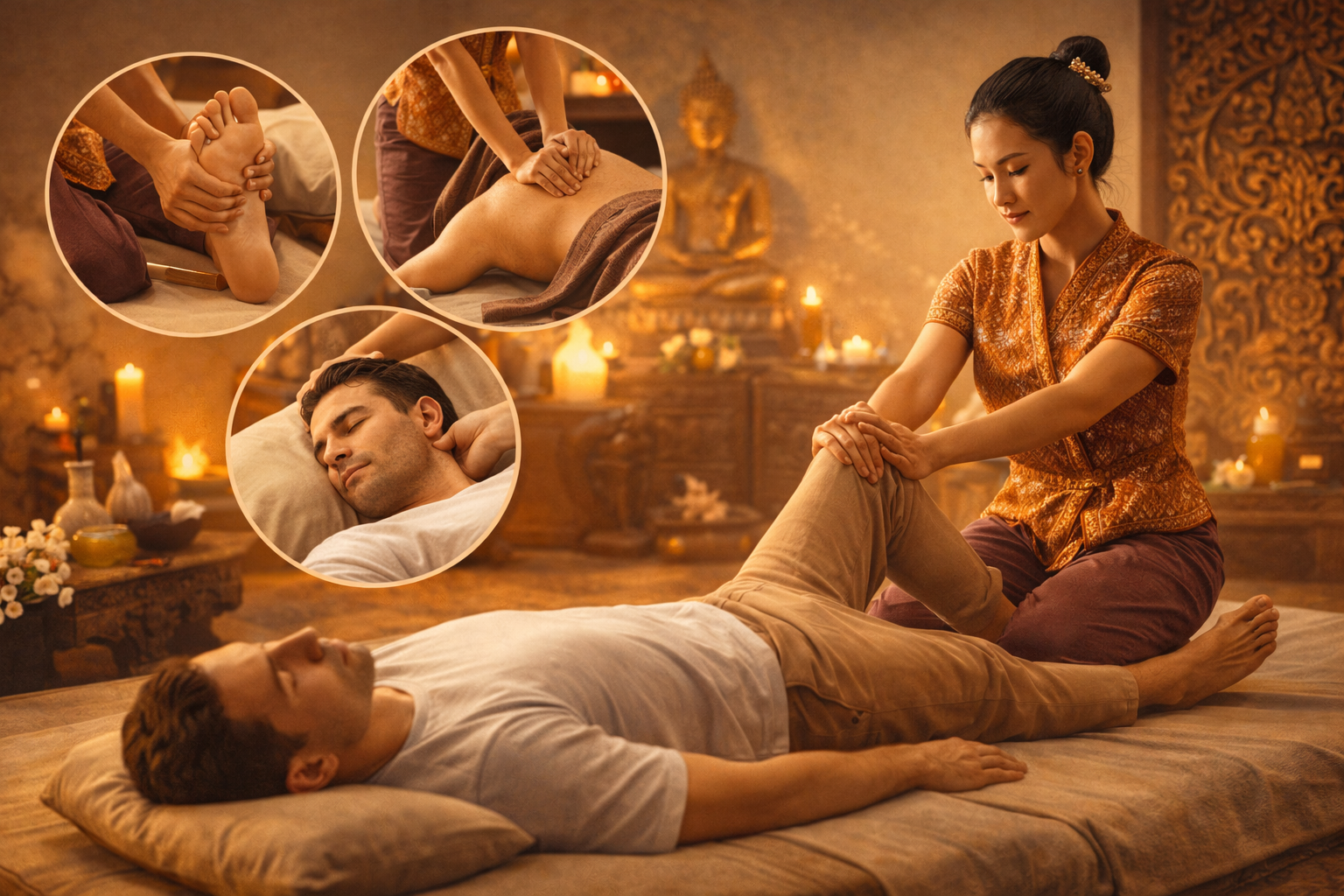
Traditional Thai massage is commonly associated with a floor mat, which allows the therapist to move around the guest and work from different positions. The exact setup can vary with the service and salon.
During a session, you may lie on your back, side or front, or sit for part of the treatment. Each position allows attention to different areas. You should feel supported and be able to ask for an adjustment.
Not every session requires every position. The sequence is adapted to the booked format and relevant restrictions, rather than following a rigid demonstration regardless of the guest.
GRANDTHAI Guide
How the Massage Begins
The therapist starts calmly, often with gentle attention to the feet and lower body. This gives you time to become familiar with the contact and pressure before the work progresses.
Traditional explanations connect the feet with the wider system of energy lines. In practical terms, beginning gently also helps establish a comfortable rhythm. It should not be described as switching internal organs on or diagnosing problems through the soles.
Let your breathing remain natural and tell the therapist how the pressure feels. A first session is a conversation as well as a physical experience.
GRANDTHAI Guide
The Main Techniques
Thai massage may include pressing, gentle rocking, assisted stretching and carefully controlled changes of position. Depending on training and the specific technique, a practitioner can use the palms, fingers, forearms and other forms of supported contact.
The therapist works with body positioning and a measured rhythm rather than abrupt force. A stretch should stay within a comfortable range; there is no requirement to push through pain or achieve a particular shape.
You may feel a contrast between focused pressure and softer transitions. These differences are part of the flow, but the intensity should remain appropriate to you throughout.
GRANDTHAI Guide
Attention to the Legs and Hips
Traditional sessions often give considerable attention to the legs. The therapist may combine pressing with gentle stretches around the thighs, calves and hip area, according to the format and individual suitability.
For a guest who has spent a long time sitting or has had an active day, this can feel like a welcome change from a fixed position. It is still important to mention hip, knee or back restrictions before any guided movement.
The goal is a comfortable experience, not forcing a joint to move further or promising to correct posture.
GRANDTHAI Guide
Working Around the Back
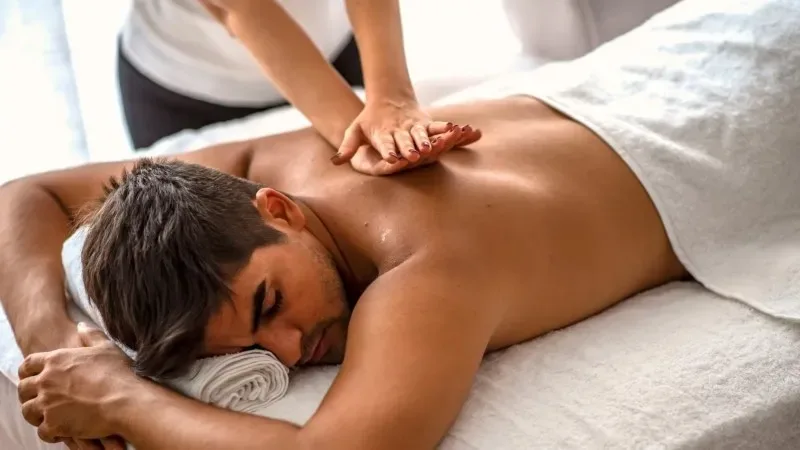
The therapist works around the muscles of the back with appropriate pressure and movement. This is not a procedure to manipulate vertebrae or “put the spine back into place”.
Different areas can feel different: the lower back, upper back and shoulder region may each require a change of pressure or position. Speak up when something does not feel right instead of assuming discomfort is a necessary part of the treatment.
A focused spa session can be chosen for everyday relaxation. Persistent back pain, an injury or known spinal problems need suitable professional advice before booking.
GRANDTHAI Guide
Arms and Shoulders
The arms, shoulders and area around the shoulder blades may be included as the session moves through the body. Gentle contact and guided movement give these areas attention after the demands of work, travel or daily activity.
Tell the therapist about shoulder limitations or sensitivity before stretching is attempted. A comfortable range of movement matters more than reproducing a dramatic pose or demonstrating strength.
GRANDTHAI Guide
Neck and Head
Some sequences finish with gentler work around the neck, head or face, where included in the booked treatment. These areas require particular care and an awareness of the guest’s preferences and restrictions.
Light pressure and a slowing rhythm can help the session feel complete. The inclusion of head or neck work is not a promise to treat headaches, improve concentration or correct sleep difficulties.
Ask about the exact treatment description: a general guide to Thai massage does not add every possible element to every service.
GRANDTHAI Guide
Breathing and Rhythm
You do not need to learn a special breathing pattern for a spa appointment. Breathe naturally and avoid holding your breath to endure pressure or a stretch.
The therapist may coordinate movement with a comfortable rhythm of breathing. A measured pace gives both people time to notice how the body responds and adjust the session. Communication remains welcome even when the room is quiet.
GRANDTHAI Guide
How the Session Ends
The intensity gradually reduces and the therapist brings the treatment to a calm finish. Take a little time before getting up so that you can move comfortably after resting in one position.
Guests describe different experiences afterwards: a feeling of lightness, calm, ease or renewed energy. None of these is something you must feel for the visit to have been worthwhile, and no particular result can be guaranteed.
GRANDTHAI Guide
How Traditional Thai Massage Differs From Oil Massage
The clearest differences are clothing, glide and movement. Traditional Thai massage is generally received in loose clothing and places emphasis on pressure and guided stretches. Oil massage uses a product to allow flowing strokes over the skin.
Neither format is automatically the right choice for everyone. Compare the actual technique, intensity and duration. Someone who dislikes stretching may prefer a flowing oil experience, while another guest may enjoy a clothed, more movement-based session.
GRANDTHAI Guide
Who Might Enjoy Traditional Thai Massage?
You do not need to practise yoga or have a particular level of fitness to ask about Thai massage. A suitable session should take account of your preferences and circumstances.
However, adaptability does not mean universal suitability. Discuss relevant conditions, pregnancy, injuries or movement restrictions before booking, and obtain medical advice where needed. A spa session should not replace assessment of persistent pain or other symptoms.
GRANDTHAI Guide
Why a Professional Therapist Matters
Training, thoughtful technique and communication all matter. A professional therapist should explain the format, ask relevant questions and adjust pressure when requested rather than insisting that every guest experience the same sequence in the same way.
Knowing what happens during Thai massage can make a first appointment feel more straightforward. Explore the GRANDTHAI catalogue, compare the available formats and choose a treatment with clear expectations about clothing, duration and pressure.
Important Information
Important Information Before Your Visit
Before booking, tell our reception team and your therapist about relevant health considerations, restrictions and recent procedures.
This article is for information only and does not replace diagnosis, treatment or advice from a doctor.